






Direct Answer
An IT provider in Munich needs to help SMBs keep up with the IT standards of large corporates, without their budget or headcount: automated onboarding, central device management, IT security and compliance (ISO 27001, GDPR, NIS2), and IT support with a defined response time - deeploi delivers this as an all-in-one platform with transparent per-user pricing, without needing to fill an in-house IT role.
Key Takeaways
- The Munich Chamber of Commerce and Industry (IHK) counts over 139,000 member companies in the city alone - one of the highest business densities in Germany.
- Munich and Upper Bavaria have the highest purchasing power of any major German city - which also pushes IT salaries higher.
- IT specialists in Bavaria earn an average of around €59,000 gross per year - well above the national average, because SMBs compete directly with corporates like BMW, Siemens, or Allianz for the same talent pool.
- Smaller Munich companies rarely match corporate salaries and benefits - making it structurally harder to build an in-house IT team.
- deeploi replaces the in-house IT hire with an expert team plus an automated platform - whether your team sits in Schwabing or is spread across multiple locations.
Your Munich company has 45 employees, is growing steadily - and competes with Siemens, Allianz, and a dozen automotive suppliers for every IT job posting. Candidates' salary expectations are set by corporate pay scales, not by what a 45-person company can realistically offer. After the third unsuccessful hiring round, IT ends up back with the office manager, handled on the side.
That's not an isolated case. Munich and Upper Bavaria have the highest purchasing power of any major German city, and that same dynamic pushes IT salaries up too - Bavarian IT specialists earn an average of around €59,000 gross per year, noticeably more than in most other German states. For an SMB that can't match corporate salaries, an in-house IT role is often simply not an economically viable option.
This article covers what modern IT support needs to deliver for Munich SMBs today - and why a platform like deeploi is often the more realistic alternative to an in-house IT hire in Munich's highly competitive labor market.
Why Munich is its own case
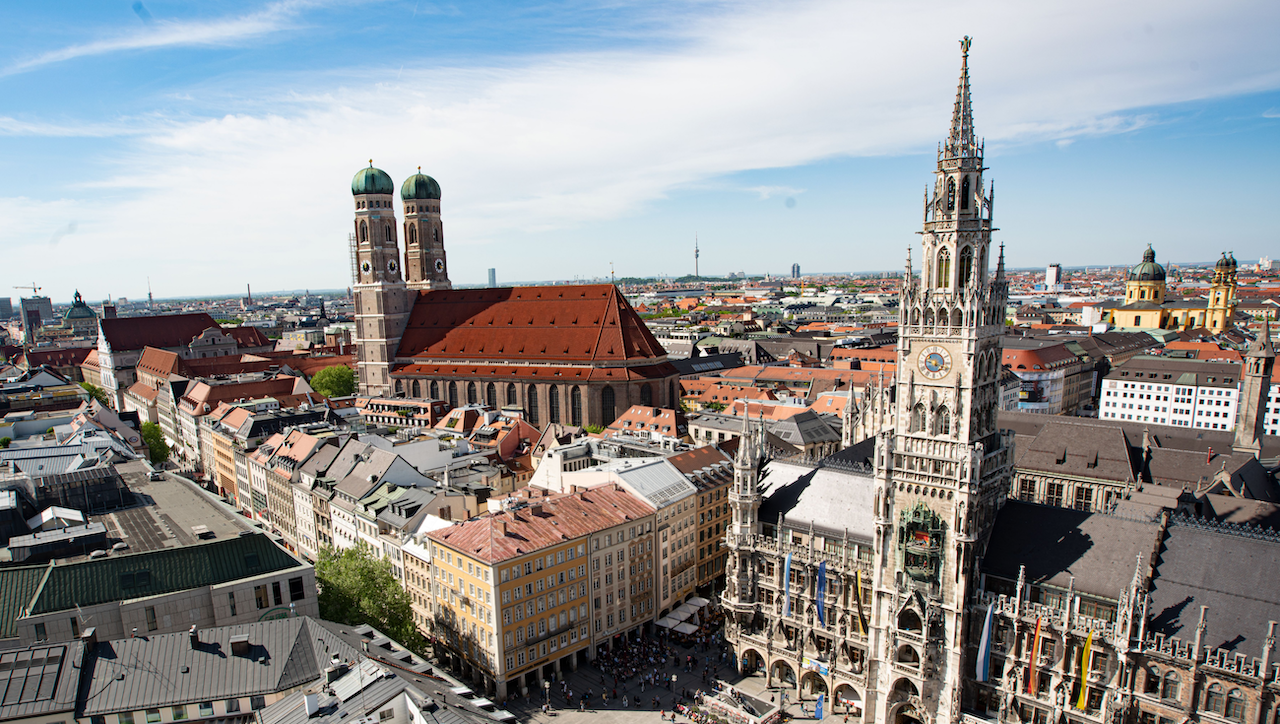
With over 139,000 IHK member companies, Munich is one of the densest business locations in Germany - shaped by a rare mix of global corporates (automotive, insurance, electrical engineering) and a broad base of engineering, tech, and consulting SMBs competing with those same corporates for talent.
Unlike Hamburg, where established Mittelstand structures set the tone, or Berlin, where startup dynamics dominate, Munich's labor market is defined by one thing above all: it's expensive and competitive. An SMB looking to hire an IT specialist is up against employers offering corporate salaries, stock packages, and on-site perks. That changes the calculation fundamentally - not just whether you can afford an IT role, but whether you can fill it at all.
Why an in-house IT hire is especially expensive in Munich
A Bavarian IT specialist costs an average of around €59,000 in annual salary - and rising, as corporates like BMW, Siemens, or large insurers such as Allianz continuously pull IT talent from the same pool. For an SMB with 30 to 150 employees, that means every open role competes not just on salary, but on benefits, brand, and career prospects against significantly larger employers.
The result is long vacancies, expensive recruiting processes, or a stopgap: IT gets handled on the side by someone whose actual role is something else entirely.

What an IT provider needs to deliver for Munich SMBs today
Automated onboarding
New hires start productive, whether they work from the Munich office or remotely. Devices are configured and ready before their first day.
Central device management
A complete device inventory that always shows which device is where, how it's configured, and whether it meets security standards - especially relevant for companies working with larger corporate clients or supply chains.
{{cta}}
IT security and compliance
Munich SMBs working as suppliers or service providers to automotive, insurance, or industrial corporates are increasingly vetted on ISO 27001, GDPR compliance, and NIS2 requirements before they even qualify as a business partner.
IT support with a defined response time
Instead of waiting on a vacant IT role or letting tickets sit for days: a support team with an average response time of 12 minutes, reachable via Slack, Teams, or email.
How deeploi supports Munich companies
deeploi replaces the in-house IT hire with an all-in-one platform combining automation and an experienced IT support team - without the months-long recruiting process and without having to compete with corporate salaries. Devices ship pre-configured directly to employees, security policies are enforced automatically, and compliance requirements are built into the platform instead of handled as a separate project.
For Munich SMBs structurally disadvantaged in the competition for talent, that shifts the question from "how do we find an IT specialist?" to "which platform can handle this for us?"
Comparison: in-house IT hire vs. deeploi in Munich
FAQ
Why is it especially hard to find IT talent in Munich?
Munich has some of the highest demand for IT specialists in Germany, alongside the highest density of corporates. SMBs compete directly on salary and benefits with large automotive, tech, and insurance companies for the same candidates.
What does an in-house IT hire cost in Munich compared to an IT provider?
An IT specialist in Bavaria costs an average of around €59,000 in annual salary, plus recruiting and overhead costs. deeploi provides the same coverage as an all-in-one platform with transparent per-user pricing and no hiring risk.
Is deeploi relevant for Munich suppliers to automotive or insurance corporates?
Yes. Companies working as suppliers or service providers to larger corporates are increasingly required to demonstrate ISO 27001, GDPR, and NIS2 compliance. deeploi covers these IT controls directly within the platform.