








Direct Answer
The best NinjaOne alternative depends on your needs: while tools like Atera, Syncro, or Action1 focus primarily on RMM and endpoint management, solutions like deeploi combine IT automation with hands-on expert support. For DACH-based SMEs without an in-house IT team, deeploi offers a particularly strong combination of ease of use, automated IT processes, GDPR compliance, and German-speaking support.
Key Takeaways
- Why companies look for NinjaOne alternatives: The main reasons are a lack of pricing transparency, limited focus on the DACH region, restricted scalability, and insufficient automation.
- The right alternative for every need: From open source solutions and free tools to all in one platforms, NinjaOne alternatives cover a wide range of requirements.
- Key criteria for making the right choice: Support quality and response times, ease of use for non IT experts, scalability as the company grows, and GDPR compliance with a strong DACH specialization are the most important factors when selecting a solution.
- deeploi is the right choice for companies without an internal IT department: The unique hybrid model combining automation with expert support reduces IT effort by up to 95 percent, ISO 27001 certified, offers German and English speaking support with an average response time of 12 minutes and transparent pricing models.
What is NinjaOne and why are teams looking for alternatives?
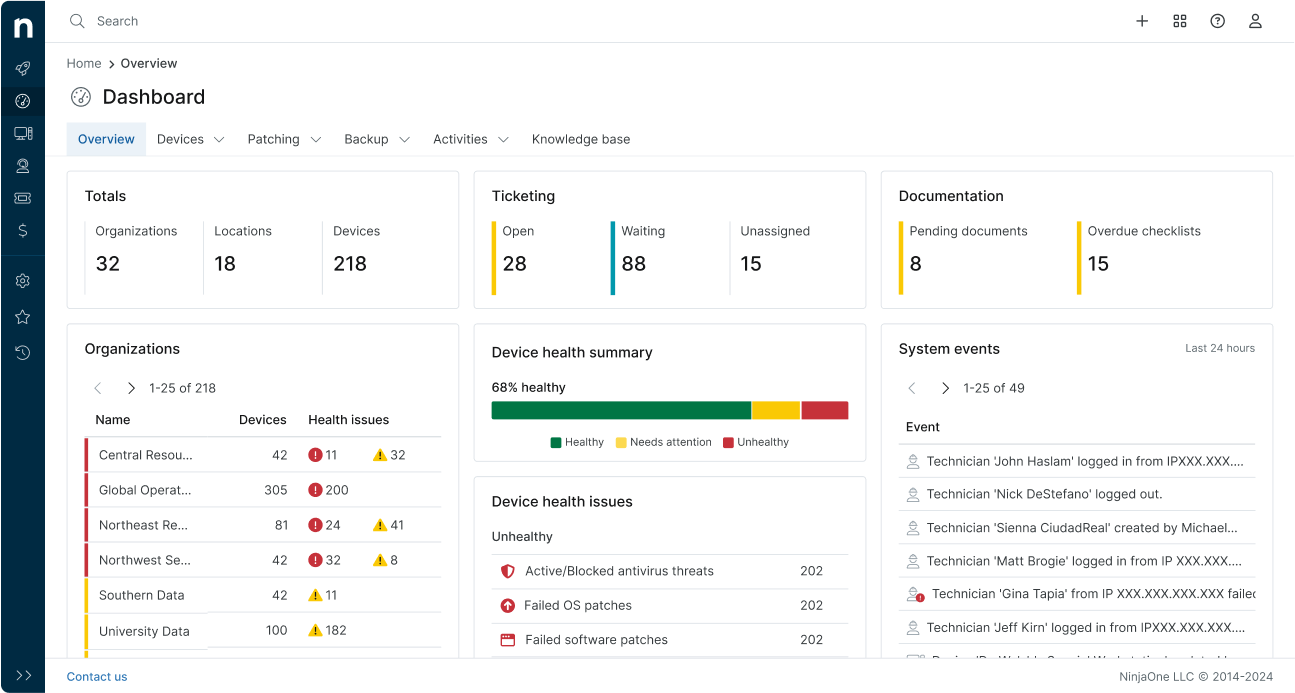
NinjaOne is a cloud based RMM platform (Remote Monitoring and Management) focused on endpoint management, automated patch management, and remote support. The solution is primarily designed for MSPs and IT teams that want to centrally manage workstations, laptops, servers, and networks. With features such as device monitoring, software deployment, and IT ticketing, NinjaOne provides a solid foundation for day to day IT operations and improved efficiency.
Despite these capabilities, many teams actively search for alternatives. There are several reasons for this:
- Lack of pricing transparency: Hidden costs and unclear licensing models make budget planning difficult. What initially looks attractive can quickly become expensive as the number of endpoints grows or additional features are required.
- No strong DACH focus: Limited adaptation to local requirements, GDPR compliance treated as an afterthought, and primarily English language support create barriers for European companies.
- Limited automation: Manual processes for onboarding new employees or integrating HR systems continue to consume valuable resources.
- Not suitable for non IT experts: Effective use of the software requires in house IT expertise, especially when configuring more complex environments.
- Scalability limitations: Companies that see IT as a strategic growth driver rather than a necessary evil need more than classic endpoint management.
OMR reviews: 4.7 out of 5 stars
Users praise NinjaOne for its intuitive interface, responsive support, and efficient patch management. However, criticism often focuses on delayed feature releases, functional differences between operating systems, and the need for improvements in reporting and remote access licensing. German speaking users in particular mention that many explanations and resources are only available in English.
11 best NinjaOne alternatives
Choosing the right NinjaOne alternative depends on your specific requirements. While some solutions focus on technical depth, others prioritize ease of use or cost efficiency. Below you will find a detailed overview of 11 well considered alternatives, ranging from specialized DACH platforms and established RMM tools to open source solutions.
NinjaOne alternatives: strengths and weaknesses at a glance
deeploi: The best NinjaOne alternative for companies without an IT department
deeploi rethinks IT management for small and medium sized businesses in the DACH region by combining a modern automation platform with hands on expert support. Unlike pure software tools, deeploi takes over the entire IT operation, from automated onboarding and device management to networks, cybersecurity, and fast expert IT support.
.png)
Strengths and benefits
- Reduces IT workload by up to 95% through fully automated and intelligent processes
- Fast onboarding in 3 to 5 minutes instead of 2 to 3 hours thanks to seamless HR integrations such as Personio
- Average support response time of 12 minutes with an SLA of 30 minutes, offering IT support in German and English
- Security and compliance built in: ISO 27001 certified, GDPR compliant, and designed specifically for DACH requirements
- Transparent pricing with no hidden costs
Weaknesses
- Strong focus on the DACH region, less suitable for global enterprises with worldwide locations
Ideal for: Fast growing startups, small and medium sized businesses, and companies without a dedicated IT department. Also a strong fit for accidental IT owners, operations roles, or founders who have to manage IT alongside their main responsibilities.
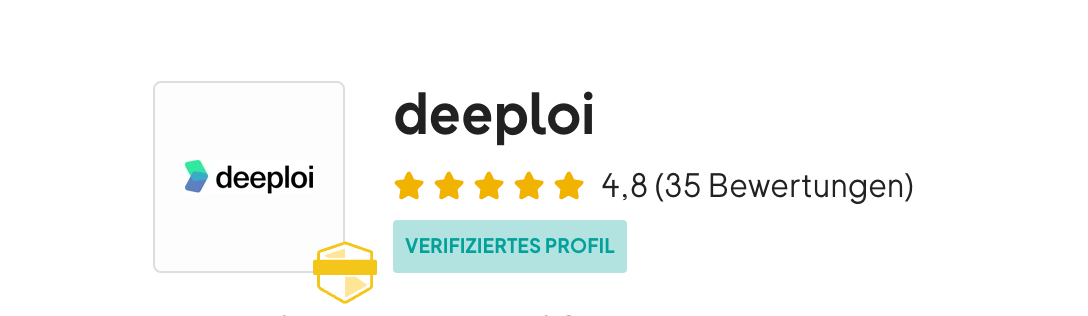
OMR reviews: 4.8 out of 5 stars
Customers praise deeploi for its fast support, significant time savings during onboarding, and the noticeable relief it brings to internal teams. Users particularly highlight the ease of use, the central overview of all IT processes, and proactive issue resolution.
Experience deeploi in a personal demo and see how you can reduce your IT workload by up to 95%.
Atera
Atera is a cloud based all in one RMM platform that combines remote monitoring, patch management, ticketing, and billing in a single tool. This approach can offer significant cost advantages, especially for MSPs managing a large number of endpoints.
Strengths
- Transparent pricing per technician, ideal for MSPs with many endpoints and a growing customer base
- Integrated IT ticketing and billing reduces tool sprawl and centralizes communication with users
- User friendly interface with fast implementation and a short learning curve
Weaknesses
- Less advanced automation capabilities compared to other tools
- Limited customization options for complex organizational structures or highly individual processes
- Support is primarily available in English, which can be a barrier for DACH based teams
Ideal for: MSPs and smaller IT service providers that manage many customers with numerous endpoints and value a simple, predictable pricing model.
OMR reviews: 4.5 out of 5 stars
Due to the small number of available reviews, the overall significance is limited. Existing feedback highlights the attractive pricing model for smaller companies, the intuitive interface, and straightforward client management. Automatic ticket creation for recurring checks is particularly appreciated. Patch management is often mentioned as an area with room for improvement.
Syncro
Syncro is an RMM platform with integrated PSA (Professional Services Automation) designed specifically for MSPs. It combines remote monitoring, ticketing, time tracking, and billing in a single solution. By linking technical operations with commercial management, Syncro positions itself as a comprehensive business platform for IT service providers.
Strengths
• Complete MSP business management suite combining RMM and PSA, reducing system fragmentation
• Strong automation capabilities for routine tasks and recurring processes
• Good value for money for smaller MSPs with limited budgets
Weaknesses
• Less suitable for internal IT teams within companies
• Initial setup can be relatively time consuming and requires patience
• Limited DACH localization with a primarily English language interface
Ideal for: Small to mid sized MSPs looking for an integrated solution for both technical and commercial management and who are willing to invest time in the initial setup.
Online reviews (no OMR reviews available)
Online review platforms show a mixed picture. Users praise the tight integration of RMM, PSA, and billing, powerful automation via PowerShell scripting, and transparent per technician pricing. Microsoft 365 integration and straightforward onboarding are highlighted positively. Criticism focuses on the outdated user interface, limited standard reporting options, and a learning curve for advanced features. Syncro is best suited for technically skilled MSPs looking for a cost effective all in one solution with strong automation.
Pulseway
Pulseway stands out with its mobile first approach, offering real time monitoring and remote management through intuitive mobile apps.
Strengths
• Excellent mobile apps for iOS and Android with well thought out user flows
• Real time notifications with contextual information for faster decision making
• Fast issue resolution via remote access
Weaknesses
• Desktop interface is less mature than the mobile experience
• Limited automation for complex workflows compared to other tools
• Higher pricing for enterprise features can put pressure on budgets
Ideal for: IT teams with high mobility that prioritize managing systems on the go and value fast reaction times.
Online reviews (no OMR reviews available)
Pulseway is frequently praised for its mobile app, which enables IT management from anywhere. Users highlight real time alerts, quick remote issue resolution, and easy implementation. Common criticism includes the less polished desktop interface, German translations that need improvement, and higher costs for enterprise level features.
Level
Level is a modern RMM platform that stands out with a clean user interface and a strong focus on core functionality. The solution concentrates on essential RMM features without unnecessary complexity.
Strengths
• Intuitive, modern interface significantly reduces onboarding time
• Fast implementation and easy operation, even for less technical teams
• Solid monitoring and alerting with clear, well structured overviews
Weaknesses
• Limited feature set compared to more comprehensive platforms
• Less suitable for highly complex IT environments with specialized requirements
• Smaller community and fewer integrations than more established vendors
Ideal for: Smaller IT teams looking for a straightforward, focused RMM solution with a strong emphasis on usability.
Online reviews (no OMR reviews available)
There are currently no official online reviews available for Level. Individual users praise the clean and intuitive interface, simple yet powerful automation features, and the clear focus on being a pure RMM tool without unnecessary complexity. Users would like to see improvements in SNMP support and Windows Update management.
Cloud Rebels
Cloud Rebels is a German managed IT services provider focused on modern, cloud based ways of working. The offering includes device management, IT support, and consulting, with a strong focus on companies in the DACH region.
Strengths
• German provider with full GDPR compliance and local, German speaking support
• Strong focus on modern cloud tools and collaborative work environments
• Personal support delivered by a German speaking team
Weaknesses
• Smaller functional scope compared to international platforms with global reach
• Higher costs compared to pure software solutions without a service component
• Limited scalability for very large organizations with more than 500 employees
Ideal for: German companies that value local expertise and DACH specific compliance.
Online reviews (no OMR reviews available)
Long term customers praise the professional support, service quality, and strong value for money. However, due to the limited number of reviews and the lack of detailed criticism, the overall significance of these ratings is limited.
ManageEngine Endpoint Central
ManageEngine Endpoint Central, formerly known as Desktop Central, is a comprehensive unified endpoint management solution from Zoho. It offers patch management, software deployment, asset management, and mobile device management within a single platform. The solution is designed for organizations with complex, heterogeneous IT environments and high compliance requirements.
Strengths
• Very broad feature set for complex environments with diverse requirements
• True multi platform management with support for Windows, macOS, Linux, iOS, and Android
• Strong value for money for large scale deployments with more than 200 devices
• Fast and responsive support
Weaknesses
• Complex setup and steep learning curve that require dedicated resources
• Interface can feel outdated compared to modern cloud based solutions
• Requires dedicated IT staff for administration and is not suitable for accidental IT owners
Ideal for: Larger companies with an in house IT department and complex, heterogeneous endpoint environments that require deep configuration capabilities.
Online reviews (no OMR reviews available)
Users frequently highlight the excellent price to performance ratio, reliable automation, and fast, competent support. Criticism focuses on the complex initial setup with a steep learning curve, a user interface that can feel cluttered, and the requirement for dedicated IT resources to manage the platform.
Kaseya VSA
Kaseya VSA is a well established RMM platform with extensive capabilities for MSPs and enterprise IT teams. The solution offers deep automation, advanced scripting options, and tight integration with other Kaseya products. Kaseya VSA is particularly known for its powerful automation engine, which can model even highly complex workflows.
Strengths
• Extremely powerful automation and scripting engine for highly customized processes
• Broad ecosystem with numerous third party integrations
• Scales well for very large MSP environments with thousands of managed endpoints and complex networks
Weaknesses
• High complexity requires significant onboarding effort and dedicated administrators
• Higher costs, especially challenging for smaller organizations with limited budgets
• Ongoing security concerns following past incidents continue to affect trust
Ideal for: Large MSPs and enterprise organizations with dedicated RMM administrators and advanced automation requirements.
Online reviews (no OMR reviews available)
Users praise Kaseya VSA for its powerful automation and scripting capabilities, comprehensive RMM feature set, and strong reporting. Criticism focuses on support quality, complex setup with a steep learning curve, and an outdated user interface. Security concerns related to past incidents further impact overall confidence in the platform.
Datto RMM
Datto RMM, now part of Kaseya, is a cloud based RMM platform known for its strong integration with Datto backup solutions. It delivers comprehensive monitoring, patch management, and automation. The tight coupling of RMM and backup makes Datto especially attractive to MSPs looking to offer an integrated, end to end solution.
Strengths
• Seamless integration with Datto backup and BDR solutions for holistic protection
• Intuitive user interface with customizable dashboards to fit individual needs
• Strong reporting and compliance capabilities to support audits and certifications
Weaknesses
• Full functionality requires additional Datto products
• Pricing can become expensive with broader usage and put pressure on budgets
Ideal for: MSPs that already use Datto backup solutions or are looking for an integrated RMM and BDR ecosystem with a strong focus on seamless backup capabilities.
Online reviews (no OMR reviews available)
Remote management features and continuous product development are frequently praised. Criticism includes inflexible licensing models with annual contracts, inconsistent patch management, and occasional login issues. Due to the limited number of reviews, the overall significance of these ratings is constrained.
Action1: The free NinjaOne alternative
Action1 is a cloud based endpoint management platform that offers a free tier for up to 100 endpoints. It focuses on patch management, software deployment, and basic remote management. The solution is particularly suitable for companies taking their first steps toward automated IT management.
Strengths
• Free version available for up to 100 endpoints, ideal for startups
• Fast deployment with no infrastructure requirements or complex setup
• Solid patch management for Windows and third party applications
Weaknesses
• Feature set in the free version is limited, with premium features available at an additional cost
• Less comprehensive than full scale RMM platforms that include monitoring and ticketing
• Limited automation and workflow capabilities for complex processes
Ideal for: Small businesses or startups with limited budgets that need basic endpoint management and are willing to trade advanced functionality for cost savings.
Online reviews (no OMR reviews available)
Users particularly appreciate Action1 for its generous free tier, easy setup and rollout, and reliable patch management. Criticism focuses on the limited predefined software repository, occasional delays in patch status updates, and missing features such as native chat communication with end users.
Tactical RMM: The open source NinjaOne alternative
Tactical RMM is an open source RMM solution built on MeshCentral and other open source components. It provides core RMM functionality without any licensing costs.
Strengths
• Fully open source and free to use, with no license fees or hidden costs
• Full control over data and hosting, ensuring maximum data sovereignty
• Active community and regular updates driven by dedicated developers
Weaknesses
• Requires strong technical expertise for setup and ongoing maintenance
• No professional support, relying solely on community based assistance
• User interface and documentation are less polished than commercial solutions
Ideal for: Technically skilled teams or MSPs that want maximum control and flexibility without licensing costs and are willing to invest time in maintenance.
Online reviews (no OMR reviews available)
There are no official reviews for Tactical RMM on established platforms. However, smaller MSPs in technical communities report successful productive use. The solution is described as fast, effective, and comprehensive for Windows administration. At the same time, cybersecurity experts raise security concerns, recommending deployment only behind dedicated hardware firewalls.
What should you look for in a NinjaOne alternative?
Choosing the right RMM alternative depends on your specific requirements. The following criteria can help guide your decision:
• Software vs. service: Do you only need a tool, or a complete solution with expert support? Hybrid models combine technical automation with human expertise. Consider whether you have sufficient IT know how in house or need professional support.
• Support quality: How fast does support respond, and in which language? Review SLAs, response times, and whether German speaking support is available. Ask yourself whether you will get help within minutes or hours when critical issues arise.
• Ease of use: Can non IT experts operate the software confidently? This is especially important for accidental IT owners in HR or operations who manage IT tasks alongside their main role. Test whether the interface feels intuitive or requires extensive training.
• Scalability: Does the solution grow with your company? Make sure pricing models and feature sets remain viable as you reach 100 or more employees. Consider whether costs per employee remain stable or increase sharply as you scale.
• GDPR and compliance: Is the solution designed for the European market? Look for certifications such as ISO 27001, EU based data hosting, and GDPR compliant data processing. Check where your data is stored and who has access to it.
Why deeploi could be the right NinjaOne alternative for companies without IT teams
If your company does not see IT as a core competency but still needs a modern, secure, and efficient IT setup, deeploi was built specifically for you. The solution is designed for small and medium sized businesses without an internal IT department, fast growing startups, and accidental IT owners who manage IT tasks alongside other responsibilities.
Unlike pure RMM tools such as NinjaOne, deeploi offers a unique hybrid model that combines a modern automation platform with personal expert support. In practice, this means your team can reduce IT workload by up to 95%, while experienced IT professionals ensure everything runs smoothly in the background. Onboarding new employees takes just 3 to 5 minutes instead of 2 to 3 hours, and support requests are answered by German speaking IT experts in an average of 12 minutes.
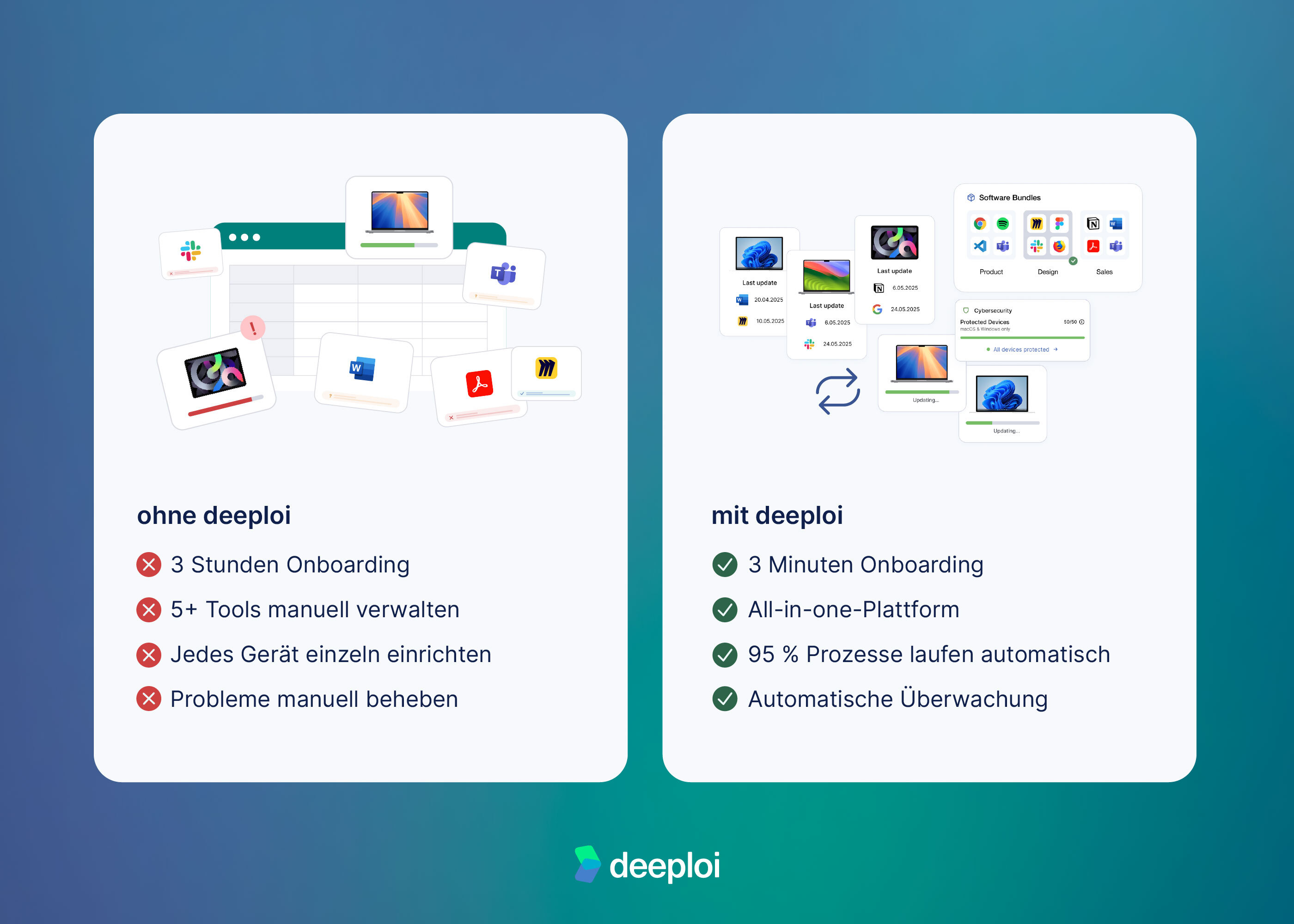
deeploi makes a real difference for non IT experts in particular. There are no complex configurations, no hidden costs, and no opaque pricing structures. Instead, you get a transparent all in one solution where it is always clear what you receive and what it costs. German speaking support with an average response time of 12 minutes ensures your team can focus on its core business instead of dealing with IT issues.
The 35 OMR reviews, with an average rating of 4.8 out of 5 stars, speak for themselves. “Since we started using deeploi, IT topics no longer fall on individual employees. They are handled centrally and efficiently by the deeploi team. The dashboard gives us much more transparency and allows us to actively manage onboarding and offboarding processes. This saves noticeable time and results in much smoother workflows,” says Marion from DFGE. Customers consistently highlight the fast IT support and the significant relief it brings to their teams.
Conclusion: Finding the right NinjaOne alternative
Choosing the right NinjaOne alternative depends on your specific requirements. Teams with sufficient time and technical expertise can benefit from open source solutions such as Tactical RMM. Startups with limited budgets may find Action1 to be a solid free option for basic endpoint management. MSPs managing many customers typically need scalable platforms like Atera or Syncro, which are designed specifically around service provider workflows.
For small and medium sized businesses in the DACH region without a dedicated IT department, all in one solutions with local support such as deeploi are often the best choice. In these cases, technical features alone are not enough. What truly matters is the level of automation, GDPR compliance, German speaking support, and the ability to transform IT from a cost factor into a driver of growth. The combination of software and service makes the decisive difference.
Our recommendation: Test at least two to three solutions through live demos or trial phases. Pay close attention to ease of use for non IT experts, the level of automation for recurring tasks, and the quality of support. These factors ultimately determine the long term success of your IT strategy and how much your team is relieved from operational IT work.
If you are looking for a solution built specifically for the DACH region that combines automation with personal expert support, deeploi is the right choice.
FAQ
What is the best alternative to NinjaOne?
The best alternative depends on your specific needs. Small and medium sized businesses in the DACH region without an internal IT department benefit in particular from all in one solutions like deeploi, which combine automation with personal support and are designed specifically for European requirements.
Which companies is deeploi better suited for than NinjaOne?
deeploi is ideal for small and medium sized businesses with 30 to 200 or more employees in the DACH region that do not have or do not want to build an internal IT department. It is especially well suited for accidental IT owners in HR, operations, or founder roles who manage IT tasks alongside their core responsibilities. Fast growing startups and companies looking for more than just software, namely a combination of automation and expert support, are also a strong fit for deeploi.
What features does NinjaOne offer?
NinjaOne provides remote monitoring and management, automated patch management, software deployment, endpoint management for Windows and macOS, remote access and support tools, asset management, and basic reporting. The platform focuses primarily on technical endpoint management and is particularly suited for MSPs and IT teams that want to centrally manage workstations, laptops, and servers.
How do I choose the right NinjaOne alternative for my company?
Consider the following criteria: level of automation and actual time savings, GDPR compliance and DACH focus, pricing transparency, integration with existing systems especially HR tools, support quality and language, ease of use for non IT experts, and scalability. Test at least two to three solutions in live demos and evaluate whether they match your company size, budget, and available technical resources.

.jpg)