








Key Takeaways
- Operations onboarding is never one-size-fits-all: New operations management hires don't just need standard access – they typically also need documentation on processes, KPI dashboards, project tools, ERP, CRM, and communication systems.
- The biggest bottleneck is IT and permissions setup: In SMBs without a dedicated IT team, laptop orders, software approvals, and access management often fall to HR, the office manager, or ops. Without a clear checklist, delays, security gaps, and frustration pile up before day one.
- A 30-60-90-day plan makes onboarding measurable: It should be clear at the 30, 60, and 90-day marks when new ops hires are expected to understand processes, propose first improvements, and gradually take ownership.
- deeploi is the ideal solution for onboarding: With deeploi, you automate devices, access, and role-based software packages – bringing onboarding down from 2–3 hours to 3–5 minutes, with a clean, secure process for every new operations hire.
When you onboard new hires into operations management, a generic onboarding checklist rarely cuts it. Ops roles sit at the centre of the company: they work across many teams, need visibility into processes, metrics, and tools, and are often expected to bring structure quickly. That's exactly what makes their onboarding so sensitive. If access, devices, or process documentation are missing on day one, the person doesn't just lose time – they start with a bad first impression of your internal operations.
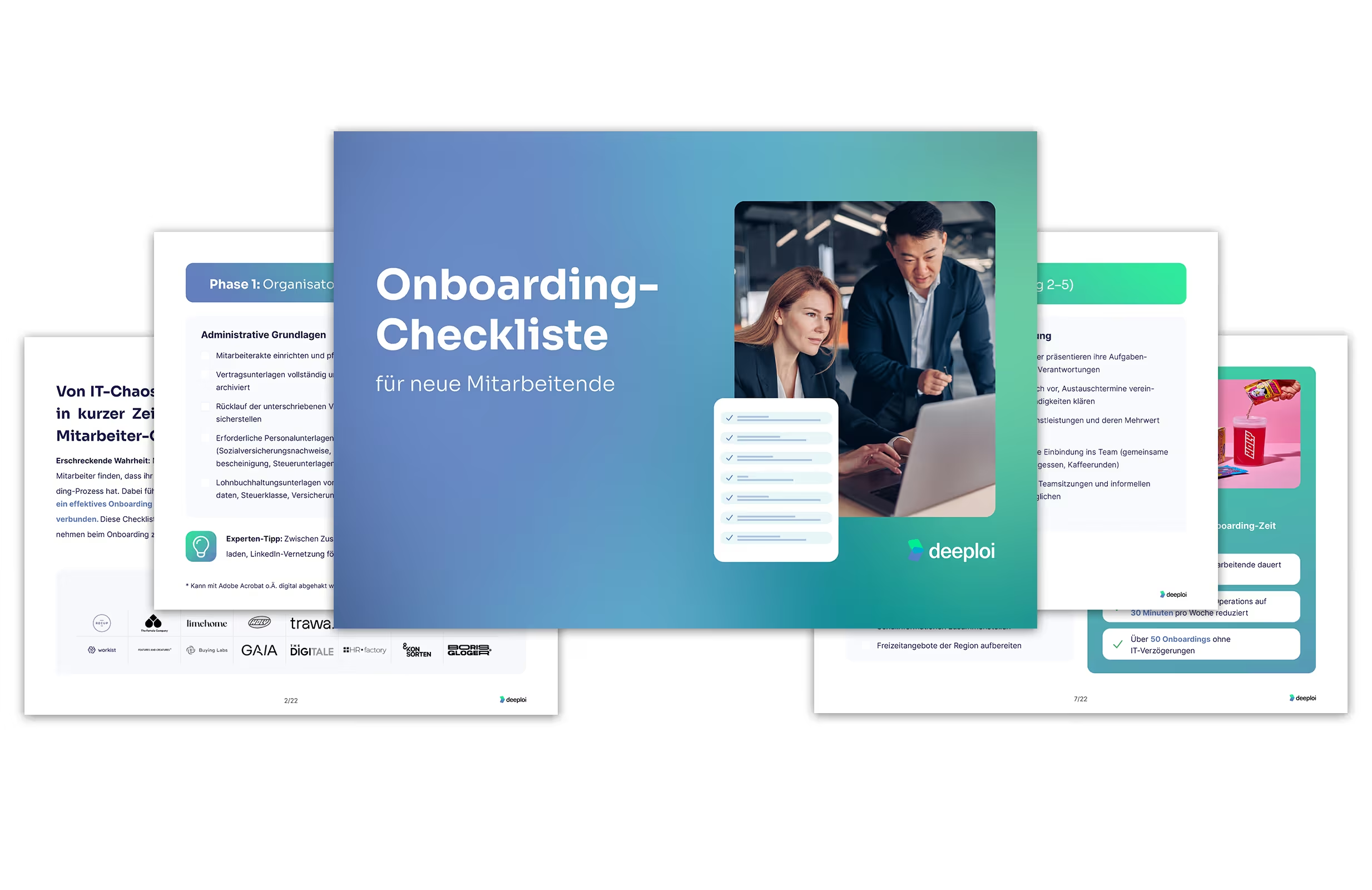
The good news: with a clear, role-specific checklist, this is entirely avoidable. This guide explains what actually matters when onboarding new operations management hires – from preboarding through the first day to a 30-60-90-day plan.
If you need the general foundation first, you'll find a broader onboarding checklist here. What follows deliberately goes deeper into the ops perspective.
Why operations roles need their own onboarding
New operations management hires often carry a particular dual responsibility in many SMBs: they need to get up to speed while simultaneously understanding processes, improving them, and eventually standardising them for other teams. That's exactly what makes their onboarding more complex than most other roles.
Wide tool stack: Ops hires often work across project management, communications, reporting, HR, CRM, and ERP systems in parallel.
Heavy process dependency: They need more than just access to tools – they also need SOPs, responsibility maps, approval workflows, and internal escalation paths.
Many stakeholders: The role sits between HR, finance, leadership, team managers, and external service providers.
High expectations for impact: In many cases, the person is expected to deliver visible operational improvements within the first 30 to 90 days.
The reality in practice: especially in smaller companies, ops onboarding tends to be a patchwork of Excel lists, verbal handoffs, and one-off tickets. Access trickles in gradually, the company device isn't ready, and critical knowledge lives only in the heads of individual colleagues. For a role that's supposed to create order, it's a bad start.
There's also a financial dimension: a failed ops onboarding can get expensive quickly. With replacement costs running at 50% to 200% of annual salary, a poor hire in operations can cost between €27,500 and €140,000. A structured start isn't a nice-to-have – it's risk management.
The operations onboarding checklist in 3 phases
Phase 1: Preboarding
- Complete contract and mandatory data: only collect data that's actually required for the employment relationship.
- Prepare equipment: laptop, accessories, company phone, and BYOD rules if applicable.
- Set up email and core access: calendar, chat, video tools, shared drives, password manager.
- Define the role-based software package: which ops tools does this person actually need on day one?
- Provide process documentation: org chart, SOPs, KPI definitions, meeting routines, responsibilities.
- Schedule the first week: welcome session, tool onboarding, stakeholder conversations, buddy.
Phase 2: First day
- Hand over a work-ready device: ideally set up and ready to go, not still running updates and installations.
- Test access: email, calendar, Drive, PM tool, reporting, HR system, ERP and CRM if applicable.
- Cover data protection and confidentiality: especially important given the broad access rights typical in an ops role.
- Clarify role and expectations: what does success look like over the first 90 days?
- Make introductions: who are the key contacts across teams and functions?
Phase 3: First weeks and months
- Build process understanding: how do approvals, handoffs, escalations, and reporting work?
- Understand KPI logic: which metrics drive your day-to-day operations?
- Close documentation gaps: capture new knowledge cleanly as you go.
- Build in regular feedback loops: at 7, 30, 60, and 90 days.
If you want to standardise your IT setup, it's worth taking a look at deeploi's automated onboarding. Especially for ops roles, a clean setup upfront makes the biggest difference.
Which tools and access operations hires need on day one
The most common cause of a rough ops onboarding isn't a missing welcome gift – it's an incomplete setup. New operations management hires can only start their work if they have immediate access to the relevant systems. Unlike many specialist roles, a standard package of email and chat isn't enough here.
What matters here is not just which tools are set up, but when and with what level of access. This is exactly where many SMBs go wrong: on day one, the person gets half their access, the rest gets added piecemeal, and no one is sure which permissions are actually needed.
A role-based setup is more pragmatic. With deeploi, you can define pre-configured software packages by role – for example, for operations, HR, or sales. Access, email accounts, and software are then set up automatically. Combined with centralized device management and clean software license management, what used to be manual effort becomes a repeatable process. It saves time, eliminates permission chaos, and gets new ops hires into productive work significantly faster.
Ops-specific 30-60-90-day plan
A good onboarding checklist doesn't end on the first day. Especially in operations management, you need a clear plan for the first 90 days – otherwise the role gets lost between daily business and mounting expectations. The focus should shift deliberately: first understand, then contribute, then shape.
For new ops hires in particular, it's important that the plan isn't just a calendar of meetings. Concrete learning and delivery goals matter:
- By day 30: able to use all core systems, understands the stakeholder landscape, key processes are documented.
- By day 60: has identified at least one operational bottleneck and proposed a workable improvement.
- By day 90: owns a sub-process independently and has documented standards for handover to other teams.
This is where the dual nature of the function becomes clear: a good ops onboarding plan doesn't just transfer knowledge – it equips the person to improve onboarding processes themselves later on. As your company grows, one good onboarding becomes a scalable standard.
Data protection, access rights, and IT security in ops onboarding
Operations hires often need broader access than other roles. That's exactly why their onboarding needs to be not just efficient, but properly secured. In practice, that means: don't grant rights wholesale – make them role-based, documented, and traceable.
- Data minimization: During onboarding, only collect and process data that is necessary for the employment relationship.
- Duty to inform: New hires must be informed about how their data is processed.
- Confidentiality obligation: In an ops environment, the commitment to handling personal and sensitive company data confidentially is central.
- Role-based permissions: Not every ops role needs admin rights. Read access and partial access are often sufficient.
- Documentation: Assigned systems, devices, and access rights should be recorded in a traceable way.
A standardized stack helps technically. With deeploi, you manage devices centrally across Windows, macOS, and iOS, enforce company standards remotely, and keep inventory and status in view. For sensitive scenarios, features like remote lock and wipe, automated device encryption, policy enforcement, and automatic patch management are particularly relevant. If you want to go deeper on this topic, this overview of MDM software is also worth a look.
The practical benefit is significant: instead of chasing access requests via ticket, you build a secure, traceable standard. It protects data, speeds up onboarding, and eliminates unnecessary back-and-forth between HR, ops, and IT.
The 5 most common ops onboarding mistakes – and how to avoid them
Most onboardings don't fail because of bad intentions – they fail from a lack of structure. Especially in operations roles, small gaps immediately affect the person's ability to work.
Mistake 1: Generic rather than role-specific checklists. Fix: create a dedicated ops template that includes tools, SOPs, KPI access, and stakeholder meetings.
Mistake 2: Process knowledge isn't documented. Fix: before the start date, gather all core workflows, approval paths, and responsibilities in one place.
Mistake 3: Access comes in drips. Fix: define a complete software package by role upfront and set it up in one go.
Mistake 4: Permissions are too broad or too loosely defined. Fix: work with minimum necessary rights and document every approval.
Mistake 5: No plan for the first 90 days. Fix: set clear milestones upfront for what the person should achieve in the understand, contribute, and shape phases.
There's a particular irony many SMBs know well: the new ops person is brought in to improve processes – but experiences a chaotic onboarding themselves. That sends exactly the wrong message. A standardised process signals from day one that you take efficiency seriously.
If you want to set this up properly from the ground up, the combination of onboarding automation, device management, and support is what makes the difference. deeploi combines platform automation with human IT support – with an average response time of 12 minutes. That's especially valuable when new ops hires in week one still have questions about devices, logins, or software.
Conclusion
A good onboarding checklist for new operations management hires brings three things together: clean preboarding, complete IT and permissions setup, and a clear plan for the first 90 days. That's the difference between a rough start and an onboarding that delivers impact quickly. When new ops hires are ready to work from day one, they understand your processes faster and can drive real improvements sooner.
For many SMBs, the IT setup is the main bottleneck. With deeploi, you automate on- and offboarding in 3–5 minutes instead of 2–3 hours, set up role-based software packages, manage devices centrally, and keep access clean and GDPR-compliant. What used to be a fragile, manual process becomes an all-in-one solution that saves time and creates security.
FAQ
What belongs on an onboarding checklist for new operations management hires?
At minimum: device, email, software access, data protection and confidentiality documents, process documentation, stakeholder meetings, and a 30-60-90-day plan. Crucially, the checklist should be role-specific – not just a set of generic HR checkboxes.
Which tools does an operations manager need on day one?
Typically, the person needs immediate access to communication, calendar, project management, knowledge documentation, and the core reporting or area-specific tools. ERP, CRM, or finance access doesn't always need to be fully in place from minute one, but should be cleanly planned and set up within week one.
How long does operations management onboarding take?
The technical setup should ideally be ready before the first day. The substantive onboarding takes several weeks – a useful frame is the first 90 days, moving from understanding to contributing to shaping.
Where do I start if there's no structured process in place yet?
Start with a simple role profile: what devices, tools, permissions, processes, and contacts does this role need? Then define a fixed checklist for preboarding, day one, and the first 90 days. That standard can then be automated step by step.
How can deeploi help with ops onboarding?
deeploi automates on- and offboarding, sets up access, email accounts, and software based on pre-defined role packages, and manages devices centrally. Zero-touch provisioning means devices arrive ready to use, and with support, patch management, and security features, the process stays stable well beyond day one.