








Key Takeaways
The topic at a glance
- Legal onboarding is not a standard case: New legal and compliance employees need a particularly clean setup from day one – covering confidential documents, sensitive data, specialist software and clearly defined access rights.
- Sequence matters: First comes the NDA, policies and mandatory training – then access credentials, devices and software. This reduces compliance risks from the outset.
- A strong onboarding checklist saves time and prevents errors: With clear tasks for preboarding, day one, week one and the first 90 days, you avoid broken handovers, duplicated effort and sloppy permissions.
- deeploi is the ideal onboarding solution: As an all-in-one solution, deeploi automates devices, access credentials and role-based software packages, reduces IT workload by up to 95% and brings onboarding down to 3–5 minutes instead of manual individual steps spread across hours.
A strong onboarding checklist for new legal and compliance employees needs to do more than a standard setup with a laptop, email and calendar. Anyone working with contracts, personal data, internal reports, data protection matters or regulatory deadlines needs a clean security and permissions framework from the very first login.
This is exactly where the biggest gaps appear in many SMEs. HR organises the preboarding, departments know their requirements, but nobody translates these cleanly into IT tasks. If you're looking for the general foundation for structured onboarding, deeploi's onboarding checklist provides the right framework. This article adds the specific requirements for legal and compliance roles on top of that.
Why legal onboarding is different from standard onboarding
New legal or compliance team members often work with particularly sensitive information within their very first hours. This includes contracts, personal data, internal policies, reports on violations and documents from external law firms. That's exactly why a generic standard onboarding process isn't sufficient here.
In practice, three mistakes typically happen simultaneously: access is granted too broadly, specialist software is set up too late and security requirements are only addressed after work has already begun. This is risky because legal roles in particular require a clean least-privilege approach. Someone tasked with reviewing contract documents, for example, doesn't automatically need access to all HR raw data or financial records.
- Access rights that are too broad increase the risk of data protection and confidentiality breaches.
- Access rights that are too narrow block productive work and delay the start.
- Missing specialist software prevents new employees from filling their role meaningfully from day one.
- Unclear responsibilities mean HR, the department and IT each assume someone else is handling the critical step.
If you want to standardise this process, a clear separation of functional requirements, security requirements and IT implementation helps. This is exactly what an automated onboarding solution addresses, so that legal onboarding doesn't have to be improvised as a special case every time.
The regulatory foundations you need to consider when onboarding
Several regulatory frameworks apply simultaneously when onboarding in legal and compliance. You don't need to interpret every piece of legislation in detail, but you should know which requirements have a direct impact on devices, access credentials, documents and training.
GDPR and the Trade Secrets Act (GeschGehG)
- GDPR: Anyone processing sensitive personal data needs appropriate technical and organisational measures in place. This includes role-based access, encryption and clear policies.
- Art. 32 GDPR makes secure processing a legal obligation, not an optional extra.
- Fines of up to €20 million or 4% of global turnover show why data protection cannot wait until week two.
- GeschGehG: Confidentiality agreements and demonstrable protective measures are especially important before confidential information is shared.
NIS2 and the Whistleblower Protection Act (HinSchG)
- NIS2 is currently directly or indirectly relevant for many organisations – for example through customers, supply chains or regulatory requirements. Legal and compliance roles need to understand reporting obligations and the extent of their organisation's exposure.
- HinSchG: Companies with 50 or more employees are required to have an internal reporting channel. New compliance team members need to understand the processes and confidentiality requirements early on.
Fines of up to €10 million under NIS2 and up to €50,000 under the HinSchG illustrate the operational relevance.
AI Act
Where AI-powered tools are used in legal work – for contract analysis, research or risk assessment – the necessary competency should be built in from the start as part of onboarding. Always check current training requirements for the specific systems your organisation uses.
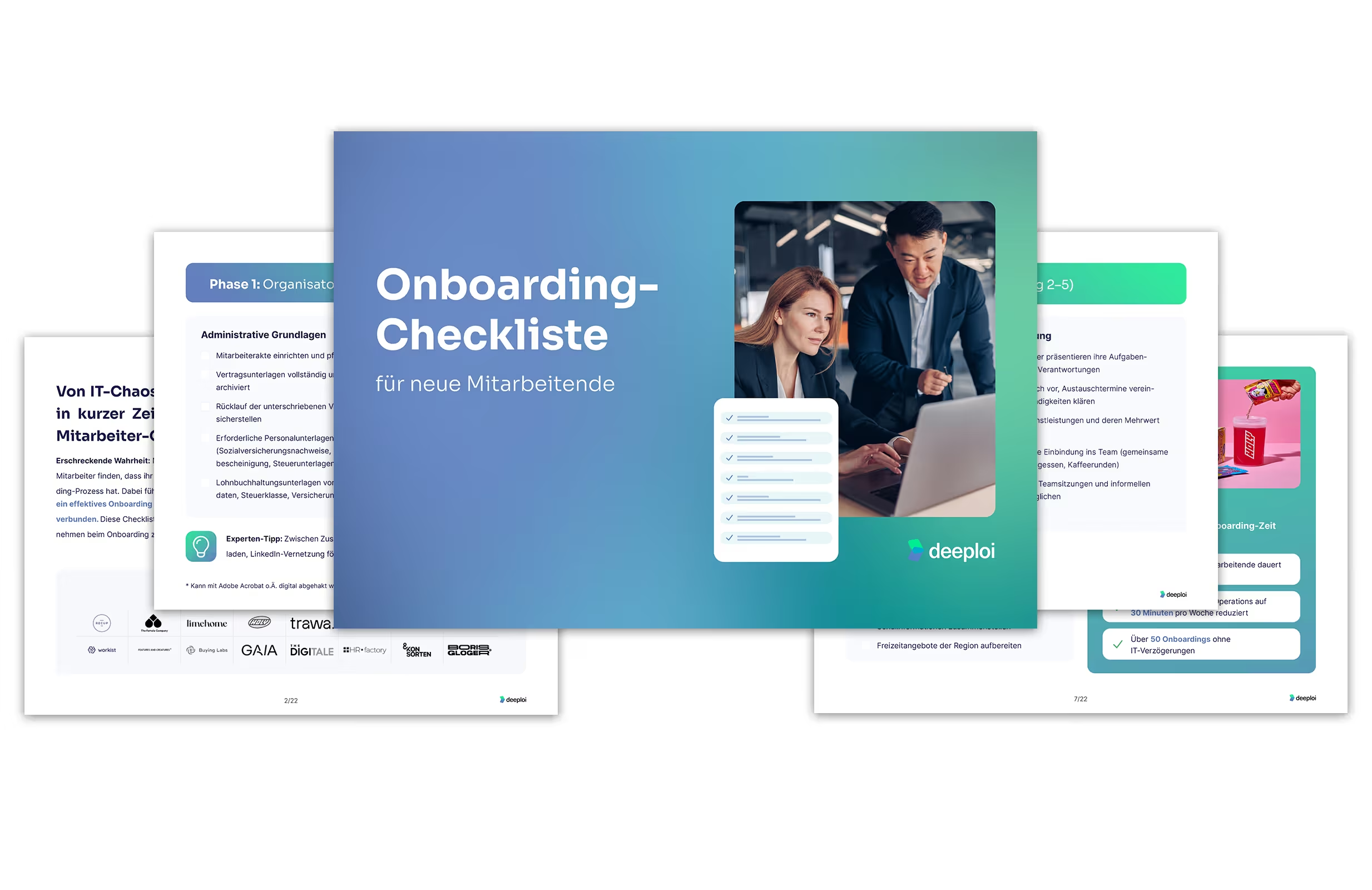
The onboarding checklist for new legal and compliance employees
The best onboarding checklist is concrete, phase-based and actionable. This ensures nothing gets lost between HR, the department and IT.
Preboarding – ideally 1 to 2 weeks before the start date
- Prepare and obtain signatures on the NDA and policies covering confidentiality, data protection obligations and internal compliance requirements.
- Reserve and preconfigure the device to company standard.
- Define the role profile including required tools, groups and permissions for legal or compliance.
- Specify access credentials for contract folders, reporting channels, DMS, law firm portals and research tools.
- Schedule mandatory training on data protection, whistleblower processes and internal policies.
On the first day
- Hand over a ready-to-use device including email, calendar, VPN, password manager and communication tools.
- Check specialist software so that contract management, legal databases and relevant platforms work immediately.
- Provide an introduction to sensitive data areas and clear rules for filing, sharing and communication.
- Explain reporting channels and escalation pathways for incidents, data protection questions and whistleblower notifications.
In the first week through to the first 90 days
- Hand over ongoing cases and deadlines in a structured way.
- Properly introduce external law firms and portals.
- Review permissions and refine them where needed – never expand them as a blanket measure.
- Document training records and capture responsibilities.
- Collect feedback on the setup so that missing tools or unnecessary permissions are identified early.
Especially in growing teams, centralised and automated preparation saves an enormous amount of time here and prevents typical handover errors.
Discuss legal onboarding with deeploi
What software and access legal and compliance roles actually need from day one
The difference between standard onboarding and legal-specific onboarding lies primarily in the tool stack and the permissions model. Beyond standard applications, the role often requires additional software for contract work, research, compliance records and secure documentation.
- Essential tools: Email, calendar, chat, password manager, VPN and productivity suite.
- Common legal tools: Contract management, compliance management, legal databases, e-signature and whistleblower systems.
- Device security: Central management, remote configuration, encryption and fast response in the event of loss.
- Clean updates: Especially for sensitive roles, patches and software versions should not be left to manual processes.
For the technical foundation, central device management, an MDM software comparison, structured software licence management and reliable patch management all help. Together, these turn individual to-dos into a robust process.
Who does what? How legal onboarding works across different IT setups
The same checklist only works in practice if it's clear who owns each step. This is exactly where many organisations fall short.
When HR or ops manages IT on the side
- HR collects contract data, the start date and the required role.
- The department defines which tools, folders and portals are actually needed.
- Problem: The technical translation into device, software and permissions tasks is often missing.
When an external IT provider is involved
- Put requirements in writing: which software, which groups, which security requirements?
- Document approvals: who may request access, who may approve it?
- Problem: Many traditional providers work on a ticket basis and don't know the specific requirements of legal roles in detail.
When an internal IT team is in place
- Build standard packages for legal and compliance instead of manually assembling every setup from scratch.
- Post-start review: after a few days, review permissions and tools together with the department.
- Problem: Overstretched IT teams often prioritise operational incidents over a structured role start.
An all-in-one solution is especially helpful here because HR data, device preparation, software deployment and support are more closely connected. This turns a diffuse triangle of responsibilities into a clear workflow with fewer back-and-forth queries and more efficiency.
How to automate legal onboarding with deeploi
Manual legal onboarding quickly consumes several hours because devices need to be prepared, accounts created, software installed, permissions granted and queries resolved. This is exactly where unnecessary IT effort builds up – even though many of these steps are standardisable.
With deeploi, you can handle on- and offboarding in 3–5 minutes instead of 2–3 hours. For legal and compliance roles, this is particularly valuable because preconfigured software packages can be deployed automatically by role – for example a dedicated internal package for legal. Through integration with HR systems such as Personio, the process starts automatically as soon as the new employee is created in the system.
- Zero-touch provisioning: Devices arrive ready to use.
- Central management: Windows, macOS and iOS are managed consistently.
- Automated software bundles: Access credentials, email accounts and approved applications are prepared cleanly.
- Security foundation: Device encryption, policy enforcement and active threat detection help protect sensitive legal data.
- Support in an average of 12 minutes: If a special case arises at the start, help arrives quickly.
For SMEs without a dedicated IT department or with overloaded processes, this is a significant lever. deeploi currently supports 200+ customers, manages 17,000+ users and has handled 3,000+ onboardings. This turns legal onboarding from a source of errors into a scalable standard process.
Conclusion
A strong onboarding checklist for new legal and compliance employees brings functional requirements together with clean IT implementation. What matters most is the right sequence, clearly defined access rights, a reliable security foundation and a setup that is ready for productive use from day one. If you manage this process manually through tickets, spreadsheets and individual arrangements, the risk of delays and compliance gaps increases unnecessarily.
deeploi is the right next solution here because it brings devices, access credentials, software and support together in one all-in-one platform. This saves time, reduces errors and takes the load off everyone involved – especially when IT is only a secondary responsibility in your organisation.
FAQ
What distinguishes legal onboarding from standard onboarding?
Legal and compliance roles work with confidential information earlier and more frequently than most other roles. As a result, access rights, confidentiality obligations, specialist software and security requirements are significantly more sensitive than in a generic standard setup.
Which training should take place before or on the first day of work?
At a minimum, data protection, internal policies on handling sensitive data and relevant compliance processes should be covered right at the start. Depending on the organisation, additional topics may include whistleblower processes, NIS2 relevance or AI competency.
What software does a new compliance team member need from day one?
This depends on the role, but typically includes email, calendar, password manager, VPN, protected document areas and specialist tools such as contract management, compliance software, legal databases or e-signature. What matters less is the number of tools and more the cleanness of their approval and management.
Where do I start practically if no process exists yet?
First, define a role-based minimal setup: device, standard software, specialist software, required folders, internal policies and responsible owners. Then create a short checklist for preboarding, day one, week one and the first 90 days – and move recurring steps into standardised workflows.
How can I automate IT onboarding for legal roles?
The most effective approach is a central solution that connects HR data, device management, software deployment and support. With deeploi onboarding, devices and access credentials can be prepared automatically, software packages assigned by role, and new employees made productive significantly faster.