






Direct Answer
IT security is essential for SMEs, as cyberattacks, outdated systems, and human error can lead to significant financial and legal consequences. With automated patch and device management, backups, MFA, endpoint protection, and employee training, businesses can build strong protection without an in-house IT team – solutions like deeploi combine this automation with personal IT support.
Key Takeaways
- 80% of all cyberattacks in Germany target SMEs: The threat situation continues to escalate, while SMEs often have limited resources for IT security (BSI Situation Report 2025).
- Basic measures close the most critical security gaps: Multi-factor authentication, automated backups, and regular software updates form the foundation of effective IT security.
- Legal requirements such as NIS2 and the GDPR make IT security a compliance obligation: Violations can result in existentially threatening fines of up to €20 million.
- Modern platforms like deeploi enable professional, integrated cybersecurity for every device – even without an in-house IT department.
The threat landscape has intensified dramatically: cyberattacks on small and medium-sized enterprises (SMEs) are increasing, while attack methods are becoming ever more sophisticated. At the same time, many SMEs lack the resources to run their own internal IT department. However, with the right measures, clearly defined processes, and modern tools, you can effectively protect your business – even without being an IT expert.
In this article, you’ll learn which concrete risks SMEs face, which measures truly provide protection, and how to implement professional IT security without having an in-house IT team.
IT security for SMEs: Why it is indispensable
Digitalization offers enormous opportunities for SMEs, but it also opens the door to cyberattacks. While large corporations have dedicated IT security teams, small and medium-sized businesses face the challenge of protecting their IT environments with limited resources.
The current threat landscape for small and medium-sized enterprises
The cyber threat situation for SMEs has worsened dramatically. More than 250,000 new malware variants are registered every day, systematically searching for vulnerabilities in networks and systems. Attackers increasingly rely on automated tools that operate around the clock.
Why cybercriminals deliberately target SMEs
SMEs are particularly attractive targets for cybercriminals for several reasons:
- They hold valuable data such as customer information, business secrets, and payment details.
- They invest significantly less in security measures than large enterprises.
- Hacking a large corporation is complex and risky. SMEs, on the other hand, often represent easy targets with a worthwhile payoff.
Attackers calculate rationally: ten successful attacks on SMEs are preferable to one failed attempt on a large enterprise.
The real cost of cyberattacks
A successful cyberattack can cost SMEs tens of thousands to several hundred thousand euros – an amount that pushes many companies to the brink of insolvency. Yet direct costs are only the tip of the iceberg. The true damage often becomes visible months later, in the form of customer churn and loss of trust.
Typical cost factors after a cyberattack:
- Direct costs: Ransom payments, IT forensics, system recovery, external IT service providers for remediation
- Business interruption: On average 21 days of operational downtime, revenue losses of €5,000-€50,000 per day, and missed business opportunities during the outage
- Legal consequences: GDPR fines of up to €20 million or 4% of annual revenue, legal fees, and compensation claims from affected customers
- Reputational damage: Customer loss due to lack of trust, negative media and social media coverage, and long-term loss of confidence among business partners
Companies that invest early in preventive IT security measures protect themselves from these devastating consequences. Modern solutions like deeploi combine comprehensive cybersecurity, automated patch management, and professional device management into a holistic protection approach.
Typical IT Security Risks for SMEs
The following threats affect SMEs most frequently and cause the greatest damage.
Ransomware
Ransomware is the most dangerous threat for SMEs. Malware encrypts all accessible data and demands a ransom for decryption. Attacks usually occur via phishing emails or security vulnerabilities in outdated software. Within minutes, all company data can become inaccessible.
Typical scenario:
An employee opens an email attachment, the ransomware spreads through the network, encrypts all accessible files, and displays a ransom demand.
How to protect yourself against ransomware:
- Automated backups: Daily backups stored on separate systems that are not permanently connected. Regularly test data recovery to ensure you can act quickly in an emergency.
- Patch management: Timely installation of security updates for all systems and software significantly reduces attack surfaces.
- Email security: Filtering suspicious attachments and links, combined with sandbox technology that safely opens unknown files before they reach the network.
- Access restrictions: Minimize write permissions on critical systems following the principle of least privilege. Employees receive only the access rights they actually need.
Phishing and Social Engineering
Phishing and social engineering target the human factor – the weakest link in the security chain. Attackers manipulate employees using psychological tactics to obtain credentials or trigger harmful actions. These attacks are becoming increasingly sophisticated and are often almost indistinguishable from legitimate communication.
Typical scenarios:
A supposed CEO requests an urgent wire transfer by email (CEO fraud), a fake invoice contains malware, or an alleged IT support agent asks for passwords over the phone.
Regular employee training is the most effective defense against these attack methods. Invest in awareness programs and run phishing simulations to strengthen security awareness across your organization.
Insecure Remote Work Environments
The shift to remote work has created new security gaps. Private Wi-Fi networks without proper encryption, unsecured home networks, and the mixing of personal and business devices provide numerous attack vectors for hackers.
You often don’t know how secure your employees’ Wi-Fi networks are, which other devices are connected to them, or whether sensitive company data is stored on private devices. This lack of visibility makes remote workplaces a popular target for attackers.
Security measures for remote work:
- Mandatory VPN usage: Encrypted connections to the corporate network for all remote access to company data.
- Device management: Centralized management and protection of all work devices with automated security configurations.
- Multi-factor authentication: An additional layer of security for all cloud services and business applications.
- Encrypted hard drives: Protection against data loss in case of device theft or loss while working from home.
Outdated Systems and Missing Updates
Outdated software is like an open door for attackers. Known vulnerabilities are systematically exploited, as seen in the WannaCry attack, which infected more than 230,000 computers in 150 countries because a Windows update had not been installed. Attackers knew that many companies delay patching.
The core issue: every piece of software has vulnerabilities. Vendors regularly release patches to fix them, but a dangerous gap often exists between release and installation. During this window, attackers can exploit known weaknesses.
Platforms like deeploi eliminate this risk through automated patch management. Updates are centrally managed and rolled out across all devices without manual effort. The dangerous gap between patch release and installation closes automatically.
Insider Threats
Not all threats come from outside the organization. Insider threats – whether intentional or accidental – account for around 30% of all security incidents in SMEs. These incidents are not limited to malicious employees; more often, they result from unintentional mistakes caused by lack of awareness or convenience.
Effective prevention combines technical safeguards such as multi-factor authentication and access controls with organizational measures like employee training, clearly defined offboarding processes, and continuous monitoring.
Compliance and Legal Requirements
Cybersecurity is not only a technical necessity but also a legal obligation. Various laws and regulations require companies to implement specific security measures. Ignoring these obligations exposes businesses not only to cyberattacks, but also to substantial fines and legal consequences.
GDPR: Data Protection as the Foundation of Security
Article 32 of the GDPR explicitly requires “a level of security appropriate to the risk,” implemented through technical and organizational measures. Violations can result in fines of up to €20 million or 4% of global annual turnover – amounts that can be existentially threatening for SMEs.
GDPR-compliant IT security measures
NIS2 Directive: New Obligations for Many SMEs
The NIS2 Directive (Network and Information Security Directive 2) is an EU-wide cybersecurity regulation that obliges companies in critical sectors to implement extensive protective measures. It significantly tightens cybersecurity requirements and now affects far more SMEs than before.
The obligations go well beyond the GDPR and include comprehensive risk management processes, incident response plans, and supply chain security. For many SMEs, this means implementing structured IT security for the first time.
ISO 27001: The International Standard
ISO 27001 is the internationally recognized standard for information security management systems (ISMS). For SMEs, certification is optional; however, the framework provides a structured approach to IT security and can deliver a competitive advantage – especially when working with larger organizations, many of which only collaborate with certified partners.
Core elements of ISO 27001:
- Risk-based approach: Systematic identification and assessment of security risks based on their relevance to your business.
- Control objectives and measures: 114 security controls across 14 categories (Annex A), serving as a comprehensive catalog of potential safeguards.
- Continuous improvement: The PDCA cycle (Plan–Do–Check–Act) ensures ongoing optimization of security processes.
- Documentation and auditability: Transparent, traceable processes and decisions form the basis for compliance and trust.
- Management responsibility: A formal commitment from top management to treat information security as a strategic priority.
Building IT Security Systematically: Practical Implementation Tips
The following steps and tips will help you build IT security in your company in a structured way and continuously improve it over time.
Step 1: Inventory and Current-State Analysis
A solid IT security strategy starts with a structured inventory and current-state analysis. This assessment forms the foundation for all subsequent steps and helps you allocate resources effectively.
First, all IT assets are systematically recorded – including devices, software, cloud services, and network components. Next, you assess which systems are business-critical and what impact a failure would have. At the same time, data is classified according to sensitivity, and existing security measures are reviewed to identify protection gaps.
Step 2: Clarify Responsibilities
IT security requires clear ownership. In SMEs without an internal IT department, it is often unclear who is responsible for what. IT security tasks frequently end up with people who are neither trained nor formally responsible – HR managers, office managers, or founders who have to manage IT on the side.
These so-called “accidental IT owners” do their best, but often lack the necessary expertise. Mistakes or knowledge gaps can lead to serious security risks.
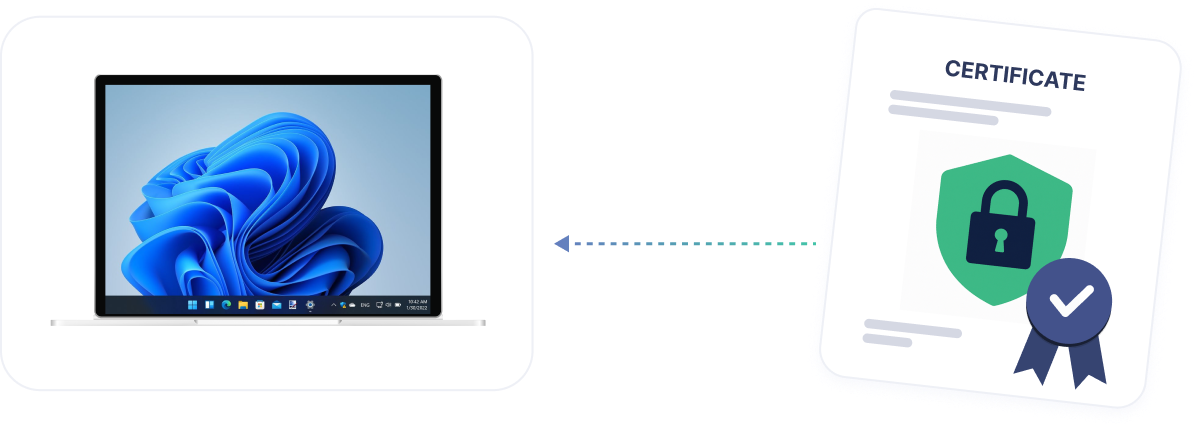
External IT service providers or platforms like deeploi can support SMEs by professionally covering core security areas such as device management, automated updates, patch management, and cybersecurity fundamentals.
Step 3: Implement Core Technical Security Measures
The following basic measures already block around 90 % of standard cyberattacks and form the foundation of IT security for SMEs:
- Automated backups
- Patch management
- Mobile device management (MDM)
- Endpoint protection
- Encryption
- Firewalls and network segmentation
- Email security
- Multi-factor authentication (MFA)
deeploi implements many of these measures in a largely automated way, reducing implementation time from weeks or months to just a few days.
Step 4: Establish Organizational Measures
Technology alone is not enough. Well-defined security concepts create the framework for sustainable IT security and ensure that processes are actually followed.
- Define binding IT security policies for passwords, device usage, and remote work.
- Establish an access control concept that defines who can access which data, based on the principle of least privilege.
- Structure onboarding and offboarding processes so that access rights are correctly granted and revoked when employees join or leave.
- Create an incident response plan with clear responsibilities for security incidents and document your backup and recovery concept for emergencies.
Step 5: Train and Raise Awareness Among Employees
Regular training is one of the most effective investments in IT security and helps build long-term security awareness across the organization.
Key IT security topics for training:
- Identifying phishing attacks and social engineering
- Secure password practices and the use of password managers
- Handling sensitive company data
- Secure working practices when working from home or on the go
- Reporting security incidents without fear of consequences
Step 6: Monitoring and Continuous Improvement
Regular monitoring ensures that security gaps are identified early and that protective measures remain effective. Systems, access rights, updates, backups, and potential vulnerabilities are continuously reviewed and adjusted as needed.
IT Security Without an In-House IT Department: Is It Possible?
This is the reality for many SMEs: there is no internal IT department, yet IT security is still essential. The real question is not whether IT security is possible without dedicated IT staff, but how to implement it without becoming overwhelmed or exceeding your budget.
The Challenge of the “Accidental IT Owner”
“I’m actually an HR manager, but somehow I’m also responsible for IT now.” Many managers in SMEs are familiar with this situation. As an “accidental IT owner,” you suddenly carry responsibility for something you were never trained to handle. You are expected to ensure IT security, defend against cyber threats, and meet compliance requirements – all alongside your actual role.
Typical challenges faced by accidental IT owners:
- Lack of expertise: No technical background, yet responsibility for complex IT security and network infrastructure
- Time pressure: IT tasks are added on top of the day job. IT security becomes a burden rather than a routine
- Limited resources: No budget for dedicated IT staff or expensive external IT service providers
There are solutions like deeploi that were designed specifically for this situation and remove much of the technical complexity.
External IT Service Providers vs. All-in-One Platforms
For SMEs without an internal IT department, there are generally three options: traditional managed service providers (MSPs), selective external IT service providers, or modern IT platforms. Each approach has its advantages and disadvantages, and the right choice depends on your specific requirements, available resources, and the importance of IT security for your business.
Modern platforms combine the best of both worlds – automation for efficiency in recurring processes such as patch management and device administration, and human support when needed for individual requirements.
{{cta}}
deeploi: IT Security for SMEs Without an In-House IT Department
deeploi was built specifically for SMEs without their own IT department. The platform combines state-of-the-art automation with human support and makes IT security more accessible than ever before.
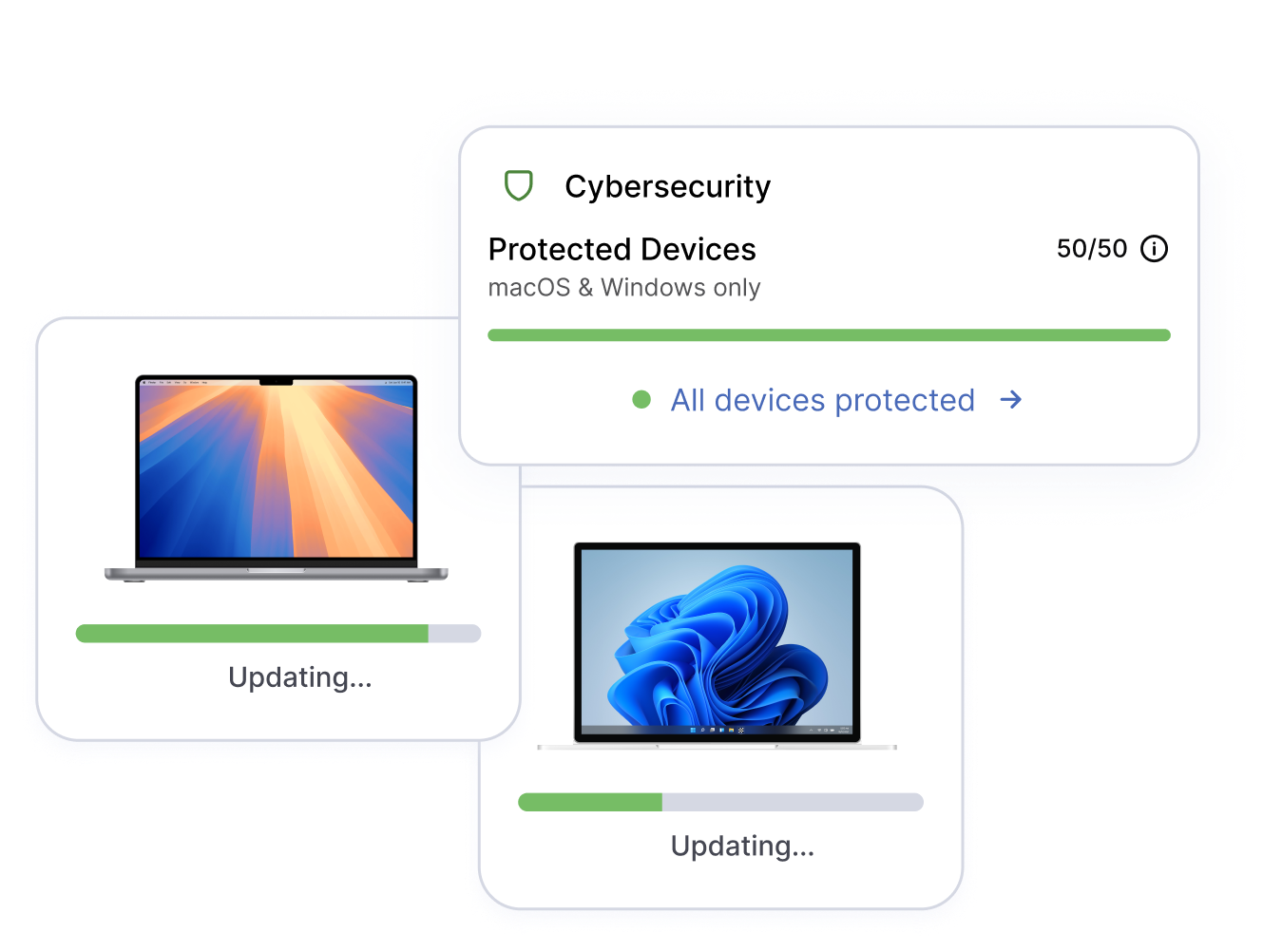
deeploi provides comprehensive protection for growing teams:
- Full device management for macOS, Windows, and mobile devices
- Integrated security policies and remote locking or wiping
- Automated software updates
- Endpoint protection and continuous monitoring
Success story: acterience reduced internal IT effort by 50 % with deeploi and saves 10 hours per week. The automotive consulting company can now focus on its core business, while deeploi ensures IT security and compliance in the background.
Would you like to find out how deeploi can improve your IT security? Schedule a conversation and receive an individual assessment for your company.
Conclusion: Strengthen Your IT Security Before It’s Too Late
The threat landscape for SMEs is real and continues to intensify. 80 % of all cyberattacks target small and medium-sized businesses, with average damages of around €200,000 – an amount that can be existentially threatening. On top of this, legal requirements such as GDPR and NIS2 make IT security mandatory and impose severe fines in case of violations.
You do not need to be an IT expert to protect your business. For SMEs without an in-house IT department, modern solutions now make professional IT security accessible. Platforms like deeploi automate complex processes such as patch management and device administration, drastically reduce operational effort, and still provide human support when it is needed.
Do not wait until it is too late. Every day without adequate IT security is a risk to your company data, your customers, and your business itself. Start today with a structured assessment, implement the most important baseline measures, and seek professional support where it makes sense.
FAQ
What does IT security include?
IT security includes technical measures (firewalls, encryption, backups, endpoint protection), organizational processes (security policies, access management, incident response plans), and human factors (employee training and security awareness). All three layers must work together to provide effective protection against cyber threats. Compliance requirements such as GDPR and NIS2 are also part of a comprehensive IT security strategy.
Do small businesses need cybersecurity?
Absolutely. 80% of all cyberattacks in Germany target SMEs, as they are often easier targets than large enterprises. In addition, GDPR and NIS2 make IT security a legal obligation with significant fines for non-compliance. Without appropriate measures, businesses risk not only cyberattacks but also serious legal consequences.
Which IT security solutions are available to SMEs?
SMEs can choose between traditional MSPs (cost-intensive but comprehensive), selective external IT service providers (flexible but fragmented), or modern IT platforms like deeploi. The latter combine automation with human support and are specifically designed for SMEs without an in-house IT department. They typically offer lower costs, greater transparency, and faster response times than traditional solutions.
Can IT security work without an IT department?
Yes – with the right tools and processes. Modern platforms automate complex security processes such as patch management, device configuration, and monitoring. Combined with fast human support for more complex issues, they enable professional IT security even for “accidental IT owners” without technical expertise. The key lies in automation, clear policies, and the right balance between technology and support.
What's the difference between IT security and cybersecurity?
The terms are often used interchangeably but have a slight distinction: IT security is the broader term covering all measures to protect IT systems, data, and networks — including physical security (e.g. access controls for server rooms). Cybersecurity is the subset focused on digital threats from the internet: attacks, malware, hacking. In the SMB context, both terms are practically identical — the focus is on protecting digital systems and data from attacks.
What should my incident response plan include?
An incident response plan defines what to do in the event of a cyberattack. Minimum contents: who is responsible internally (including nights and weekends)? Who is contacted first (IT provider, management, authorities)? Which systems are immediately isolated? How is operations maintained? When and how are customers and partners informed? For NIS2-obligated companies, an initial notification to the BSI within 24 hours of discovering a significant incident is mandatory.



%25402x.png)