



Direct Answer
IT Asset Management (ITAM) gives companies full visibility into their hardware, software, and other IT assets, helping reduce costs, security risks, and compliance issues. With deeploi, key lifecycle processes – from procurement and onboarding to maintenance and offboarding – can be automated, reducing IT workload by up to 95%.
Key Takeaways
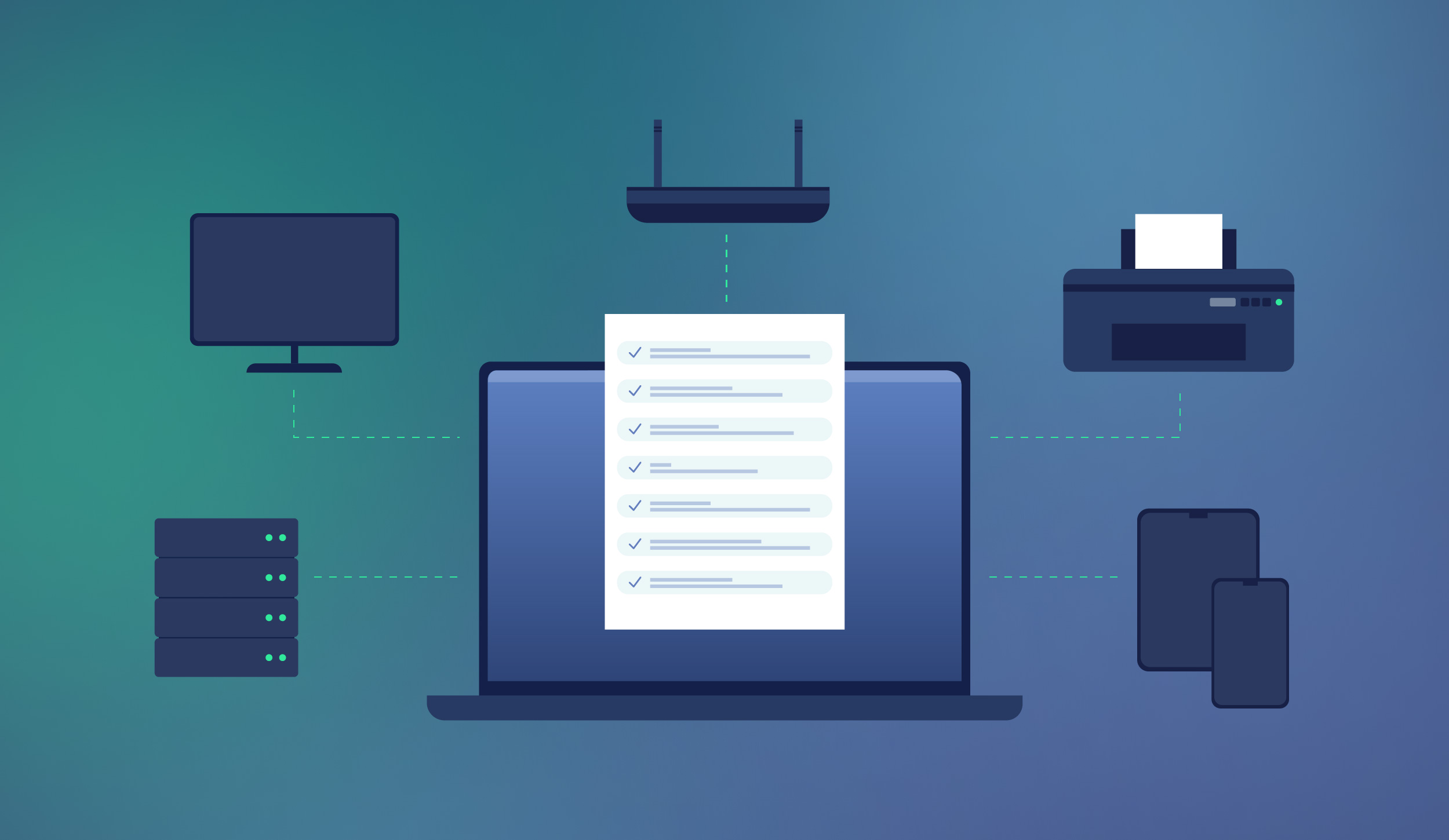
IT Asset Management (ITAM) is the key to an efficient, secure, and cost-optimized IT infrastructure. In an era where companies juggle hybrid cloud environments, mobile devices, and an ever-growing number of SaaS applications, many lose track of their IT resources. The results: unnecessary costs, compliance risks, and security gaps. ITAM brings transparency to all hardware, software, cloud, and virtual assets.
The 5 phases of the IT asset lifecycle
Every IT asset goes through a clearly defined lifecycle – from the initial request to secure disposal. A structured IT asset lifecycle management process ensures that each phase is handled effectively, costs remain transparent, and compliance requirements are consistently met. The following five phases form the backbone of a successful ITAM process.
1. Request – where it all begins
Everything starts with an asset request: a new employee needs a laptop, or a team needs additional software licenses. This phase determines whether a request is justified and which standards apply.
Key success factors in this phase:
- Standardized request processes: Clear workflows prevent uncontrolled growth and ensure all requests are recorded centrally.
- Approval criteria: Defined budgets, technical standards, and needs assessments enable informed decisions.
- Self-service portals: Employees can request assets independently while IT teams stay in control.
deeploi solution: with deeploi, the required hardware and software can already be captured during onboarding. As soon as a new employee is created – directly in the tool or via seamless integration with Personio or other HR systems – the appropriate hardware and software packages can be assigned.
2. Procurement – strategic purchasing
Once approved, the request moves to strategic procurement. This involves more than just buying – it’s about smart vendor management, contract negotiations, and ensuring new assets fit seamlessly into the existing IT infrastructure.
Best practices for the procurement phase:
Beschaffungsphase:
- Vendor management: Long-term relationships with preferred suppliers lead to better pricing and service levels.
- Contract management: Centralized oversight of warranties, SLAs, and renewal dates prevents unwanted auto-renewals.
- Standardization: Unified hardware and software standards reduce complexity and support workload.
- Consider lifecycle costs: It’s not just the purchase price – maintenance, support, and energy consumption matter too.
deeploi solution: with deeploi, you can order hardware directly through the platform without dealing with multiple vendors. You can choose between purchasing and renting devices. You always have a clear overview of your inventory and can instantly see which devices are in use and the status of pending orders.
3. Implementation – provisioning and deployment
The implementation phase is when assets become productive. New hardware must be configured, software installed, and everything properly inventoried. This phase is essential for accurate tracking later on.
deeploi solution: deeploi automates the entire IT onboarding process: once a new employee is set up, the hardware can be assigned. All required apps are installed automatically, and everything is recorded in the central asset database. This reduces IT effort by up to 95 % and ensures a flawless first day at work.
4. Maintenance – continuous care
IT assets need attention throughout their entire lifecycle. Software updates, hardware repairs, and regular security patches are essential to maintain security and performance.
Core maintenance tasks:
- Software updates: Regular patches close security gaps and improve functionality
- Hardware maintenance: Preventive care extends device lifespan and avoids unplanned downtime
- Performance monitoring: Early detection of issues enables proactive action
- License compliance: Ongoing monitoring prevents over- or under-licensing
deeploi solution: deeploi continuously monitors all IT assets and automates software updates and patch management to increase security. The system automatically detects outdated software, and you can see the device’s encryption and security status at a glance.
5. Decommissioning – secure disposal
The end of an asset’s lifecycle requires special attention. Data protection, compliance, and sustainability must remain the focus during decommissioning.
- Data deletion: GDPR-compliant erasure of all sensitive data following certified standards
- Asset return: Structured offboarding processes prevent hardware from going missing
- Reuse potential: Functional devices can be reassigned internally or sold
- Documentation: Complete records of device status, return, or disposal for compliance audits
deeploi solution: deeploi also automates offboarding: once you select the person, all accounts for software tools managed by us can be deactivated as needed. You always have full visibility into the current status of the device.
Why IT asset management is indispensable?
Modern businesses can no longer afford to manage their IT resources blindly. The benefits of ITAM range from direct cost savings and risk reduction to major efficiency gains across the entire IT operation.
Cost transparency and budget optimization
One of the strongest arguments for ITAM is the significant savings potential. Many companies pay for software licenses that no one uses or purchase hardware twice because transparency is missing. A Gartner study shows that organizations can reduce their software costs by up to 30 % by applying best practices for license optimization.
Concrete savings opportunities:
- Up to 30 % reduction in software costs by identifying unused licenses and improving license models
- Avoiding duplicate purchases through full transparency of existing assets
- Optimized hardware utilization by extending lifecycles and reusing devices strategically
- Lower support costs through standardization and fewer hardware variations – a unified IT landscape reduces complexity and training needs
These savings often offset the investment in IT asset management software within the first year.
Compliance and risk reduction
Compliance violations can be costly. License audits by software vendors regularly lead to five- or six-figure back payments. At the same time, GDPR and ISO 27001 continue to tighten the requirements for documentation and control of IT assets.
ITAM helps ensure compliance with:
- GDPR requirements: Complete documentation of where personal data is processed. IT asset management software records all devices and applications that handle sensitive data and provides seamless proof during audits.
- ISO 27001: Evidence of control and security across all IT resources. The standard requires a structured asset inventory – exactly what professional ITAM delivers.
- Software licenses: Avoiding under- or over-licensing. Software asset management continuously tracks how many licenses are installed and actually used.
- Industry regulations: Specific compliance requirements in regulated sectors such as healthcare or financial services. ITAM tools support the fulfillment of these guidelines through automated documentation and reporting.
Efficiency gains in IT operations
IT teams often spend a large part of their time on administrative work: manually recording assets, maintaining spreadsheets, or installing software. ITAM tools automate these tasks and give you back the time you need for strategic projects.
With deeploi, IT workload can be reduced by up to 95 %. At the same time, you cut IT costs, since you no longer buy too many devices or software licenses.
Strengthening IT security
Outdated software and insecure systems are common entry points for cyberattacks. ITAM gives you the visibility you need to close security gaps.
Security benefits of ITAM:
- Detection of outdated software: IT asset management software continuously scans all devices and alerts you when critical updates are missing or software is no longer supported by the vendor.
- Expose shadow IT: Employees sometimes install tools without informing IT. This shadow IT can introduce security vulnerabilities and create compliance risks.
- Faster incident response: In the event of a security incident, you immediately know which devices or apps are affected.
- Compliance-aligned configurations: Ensuring all assets are configured according to security standards.
With deeploi, you are protected from security risks and can roll out critical updates with priority – creating an IT infrastructure that is not only efficient but also secure. The platform integrates with leading security tools and provides a central place for all security-relevant asset information.
Challenges in IT asset management
Despite all the advantages, implementing ITAM is not without hurdles. Many organizations face similar issues that can jeopardize the success of their asset management initiatives. The good news: once you understand these challenges, you can address them proactively.
The complexity of modern IT environments
The days when IT assets consisted only of on-premise servers and desktop PCs are long gone. Today, companies must manage highly complex, hybrid IT infrastructures – and this puts enormous pressure on IT teams.
Challenges driven by complexity:
- Diverse endpoints: Windows PCs, MacBooks, iPads, Android smartphones, IoT devices – all with different management requirements. Hardware asset management must be able to record and manage this entire spectrum of device types.
- Generational mix: New cloud-native applications coexist alongside legacy systems that have been running for 20 years. This heterogeneous IT landscape requires different maintenance and security strategies.
- Decentralized teams: Remote work and global locations make physical hardware control more difficult. Assets are spread across different places, complicating inventory and maintenance.
This complexity causes many companies to lose oversight. A high-performing IT asset management system must be capable of capturing and managing all these different asset types and environments.
Manual processes and Excel chaos
A shocking number of companies – even larger mid-sized ones – still manage their IT assets with Excel sheets, email threads, and manual processes. What might work with 20 employees turns into a nightmare as the organization grows. Without a central IT asset management solution, chaos emerges that costs time, money, and nerves.
Typical problems of manual ITAM processes:
- Outdated data: Excel spreadsheets are outdated the moment they are created. New assets are forgotten, retired assets remain on the list – the documentation is never fully up to date.
- Error-prone: Typos, missing entries, incorrect assignments. Manual documentation is prone to errors and leads to inconsistent data.
- Time-consuming: Physical inventories take days or weeks and tie up valuable resources. IT teams spend more time on administrative work than on strategic projects.
- No automation: Every step requires manual effort – from inventory to maintenance. IT processes remain inefficient and fragile.
- Audit risks: During audits, up-to-date and reliable data is often missing. Compliance evidence cannot be provided, which can lead to fines.
.jpg)
The solution is clear: modern IT asset management software automates these IT processes, keeps data up to date in real time, and gives IT teams back control. With deeploi, you replace Excel chaos with an intelligent, automated platform – and reduce IT workload by up to 95 %. You can instantly see which devices are already assigned, which ones are ready for new employees, and where action is needed.
IT asset management software – what should it be able to do?
Not every ITAM tool is the same. Choosing the right one determines whether your asset management becomes a success factor or a source of frustration. The following core features help you truly simplify IT resource management and deliver measurable benefits.
Automated asset detection and inventory
The foundation of effective IT asset management is a complete and current overview of all IT assets. Manual tracking is time-consuming and error-prone – modern ITAM software fully automates this process.
- Automatic network scanning and detection of all devices: The software instantly identifies new hardware assets as soon as they join the network – from laptops and servers to network components like routers.
- Recording hardware details, installed software, and configurations: The software documents not just the existence of the IT asset but also technical specifications, installed applications, operating system versions, and configuration details.
- Real-time updates when IT infrastructure changes: As soon as software is installed, hardware is replaced, or configurations change, the system updates automatically.
Comprehensive lifecycle management
IT assets pass through several stages – from request to retirement. A strong IT asset management system supports you throughout the entire lifecycle and automates critical workflows.
- Managing all lifecycle phases from request to disposal: Every phase of the IT asset lifecycle is represented in the software – request, procurement, deployment, maintenance, and secure decommissioning.
- Automated workflows for procurement, deployment, and offboarding: Standardized processes ensure that no steps are missed and everyone involved is informed at the right time.
- Tracking warranties, maintenance contracts, and end-of-life dates: The software notifies you when warranties expire, maintenance contracts need renewal, or hardware reaches the end of its useful life. This helps you avoid unplanned downtime and unwanted auto-renewals.
- Integration with procurement and finance processes: Connecting to purchasing systems and accounting enables seamless management of orders, invoices, and budgets. All costs are automatically assigned to the correct cost centers.
Software license management
Software licenses are among the most expensive and complex IT assets. Software asset management as part of an ITAM solution helps reduce costs and minimize compliance risks.
- Monitoring license usage and compliance status: The software continuously tracks how many licenses are installed and actually used, allowing you to identify over- or under-licensing immediately.
- Identifying unused software: Licenses that no one uses waste money. ITAM software shows exactly where savings are possible – often up to 30 % of software costs can be saved through better license management.
- Automatic alerts for license expiry or compliance risks: You receive notifications before licenses expire or compliance issues arise, giving you time to renew or adjust.
Integration and automation
IT asset management software should integrate seamlessly into your existing IT landscape and replace manual processes with intelligent automation. Isolated solutions create more problems than they solve – integration is the key.
- Seamless connection to HR systems like Personio for automatic onboarding: Once a new employee is created in the HR system, the IT onboarding process starts automatically. Hardware is prepared, software is installed, and access is set up.
- Automated workflows drastically reduce manual effort: From asset requests and approvals to deployment, automated steps accelerate the entire process. IT teams save up to 95 % of the time they previously spent on administrative tasks.
Security and compliance
IT security and compliance are not side topics – they are core requirements for every IT infrastructure.
- Detection of outdated software and missing security patches: The software continuously scans all devices and identifies vulnerabilities caused by outdated software or missing updates. This allows you to prioritize risks and roll out critical patches quickly.
- GDPR-compliant data handling and documentation: All personal data is processed and stored in line with GDPR requirements. The software provides complete documentation of which IT assets handle personal data – a fundamental requirement for audit-ready compliance.
- ISO 27001 support through complete asset tracking: The standard requires a full asset inventory and control over all IT resources.
- Audit reports at the push of a button: When audits come up, many tools generate all required reports automatically – from license compliance and hardware inventory to security status.
Reporting and analytics
Data without insights has no value. A strong ITAM solution transforms asset data into actionable information that enables informed decision-making.
- Intuitive dashboards for a quick overview: You see the most important KPIs at a glance – number of assets, license usage, upcoming maintenance, budget status. No need to sift through complex reports.
- Cost transparency and budget tracking: All IT expenses are recorded centrally and assigned to the correct cost centres. You can instantly see where money is spent, which assets generate the highest costs, and where savings are possible.
- Data-driven decisions for IT strategy: Should hardware be extended or replaced? Which software licences are worth keeping? Where are investments most effective? The platform provides the insights you need.
deeploi – the all-in-one solution for IT asset management
deeploi meets all requirements and goes one step further: as an all-in-one platform, it combines ITAM with IT service management, automated onboarding, and intelligent expert support. The solution is designed to be so user-friendly that even non-IT specialists can work with it.
With deeploi, you reduce your IT workload by up to 95 % while laying the foundation for scalable growth. The platform not only automates the management of IT assets but also integrates seamlessly with your existing HR tools. Many manual processes are automated, and you benefit from integrated procurement options whenever you need new devices.
Conclusion – IT asset management as a success factor
At a time when IT environments are becoming more complex and the management of IT resources can determine success or failure, professional ITAM is indispensable.
Key takeaways:
- Cost savings: Up to 30 % reduction in software costs and significant savings through optimised procurement and lifecycle management. Companies that manage IT assets systematically identify unused licences and avoid duplicate purchases. The investment in IT asset management software often pays off within the first year.
- Risk reduction: GDPR compliance, ISO 27001 alignment, and protection against expensive licence audits. With a central asset database, you are always audit-ready and can document all regulatory requirements. Software asset management prevents under- and over-licensing, while hardware asset management ensures full device control.
- Efficiency gains: Automation reduces manual work by up to 95 % and gives IT teams more time for strategic tasks. Instead of maintaining spreadsheets and manually tracking assets, you focus on core projects. IT processes become faster, more reliable, and more scalable.
- Security: Early detection of vulnerabilities and outdated software protects against cyberattacks. ITAM solutions continuously scan all devices, identify missing security patches, and warn you about end-of-life systems.
- Scalability: Professional ITAM provides the foundation for sustainable company growth. As your organisation expands, your IT needs grow as well. With a scalable asset management solution, you can grow from 50 to 500 employees without creating bottlenecks in IT operations.
Curious to find out how deeploi can support your company with IT asset management? Our experts will be happy to walk you through everything in a free demo.
FAQ – Frequently asked questions about IT asset management
What is IT asset management (ITAM)?
IT asset management is the systematic recording, management, and optimization of all IT resources within a company throughout their entire lifecycle. This includes hardware (servers, PCs, smartphones), software (licences, SaaS subscriptions), cloud resources, and virtual assets. The goal is maximum efficiency, cost control, and compliance. Modern ITAM software automates these processes and provides full transparency across all IT assets – from procurement to decommissioning.
What are the benefits of IT asset management for companies?
ITAM delivers significant cost savings (up to 30 % for software), improved compliance, enhanced IT security through detection of outdated systems, and major efficiency gains through automation. Companies gain complete visibility into their IT infrastructure and can make data-driven decisions. Managing IT resources shifts from a time-consuming task to an automated process that saves up to 95 % of administrative effort.
How does IT asset management differ from IT service management (ITSM)?
ITAM focuses on physical and digital assets themselves – recording, managing, and optimising them throughout their lifecycle. ITSM focuses on delivering and supporting IT services for end users. The two complement each other perfectly: ITAM provides the asset data that ITSM needs for effective support. While software asset management tracks licences, IT service management handles tickets and incident management. Together, they form a comprehensive IT solution.
What challenges exist in IT asset management?
Common challenges include shadow IT (unauthorised software usage), the complexity of hybrid IT environments with cloud, on-premise, and mobile devices, and error-prone manual processes based on spreadsheets. Modern ITAM tools address these issues through automated detection, centralised management, and intelligent workflows. Inventory is captured automatically in real time, and all IT assets are recorded – regardless of their location or type.
What is the difference between hardware asset management and software asset management?
Hardware asset management (HAM) manages physical devices such as servers, computers, and smartphones – including location, condition, and maintenance. Software asset management (SAM) focuses on software licences, usage rights, and compliance. Professional ITAM unifies both areas in one platform for complete transparency. This gives you full visibility across all IT resources – from hardware assets and software assets to cloud services – and allows you to manage the entire asset lifecycle effectively.